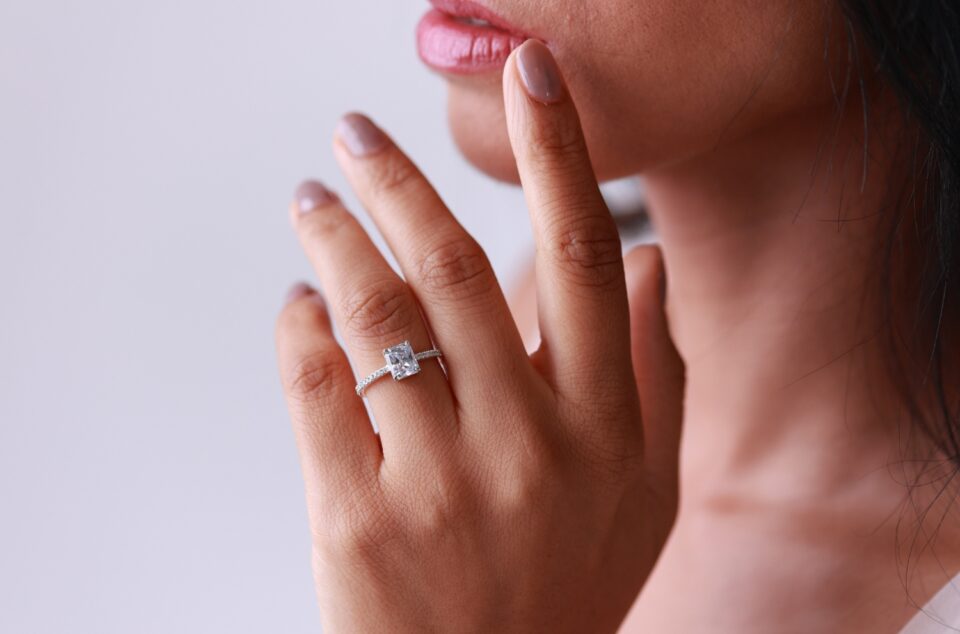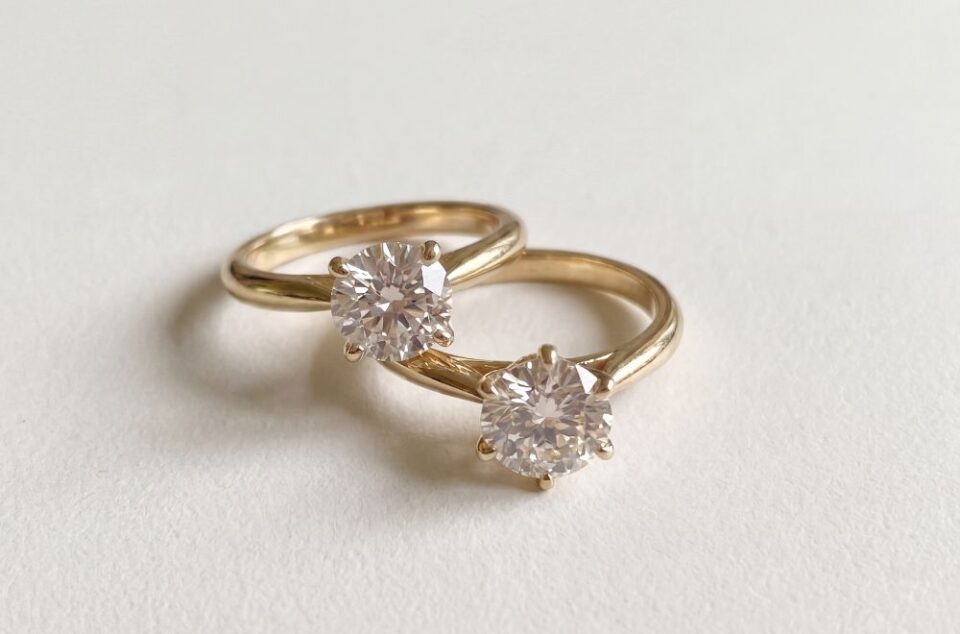
Choosing an engagement ring is about more than selecting a beautiful diamond only. The setting determines how the stone is held, how much of it is visible, and how the ring looks and feels when worn every day. If you have narrowed your choice to a classic four-prong or six-prong setting, understanding the practical difference can make the decision much easier. For shoppers, the 4 vs 6 Prong Engagement Ring choice is often the first setting decision to make.
This guide breaks down the 4 vs 6 Prong Engagement Ring decision so you can choose with confidence.
What Is a Prong Setting?
Prongs are small metal claws that extend over the edge of a gemstone to hold it securely in place. They are one of the most common ways to mount a centre diamond in an engagement ring. The number of prongs affects both the appearance of the setting and how much structural redundancy it has if one prong becomes damaged or needs repair.
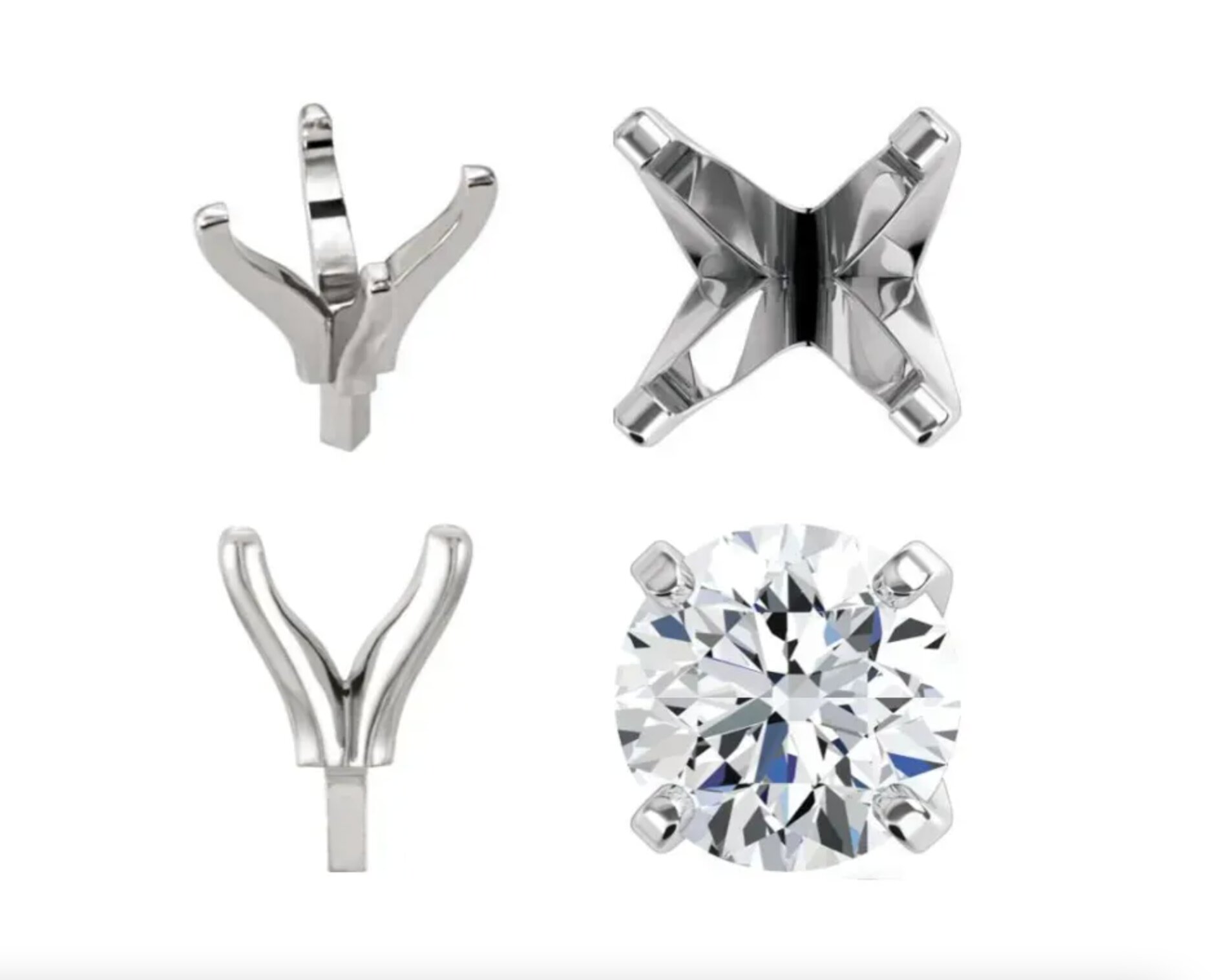
A four-prong setting positions four claws around the stone, generally at opposing points. A six-prong setting places six claws around the perimeter. The difference may sound small, but it can noticeably change the visual balance of a ring, particularly with a round diamond.
For a closer look at how prong styles can change the appearance of an engagement ring, take a look at some of our engagement ring products.
Pear Solitaire Engagement Ring
Square Cushion Solitaire Engagement Ring
Emerald Solitaire Engagement Ring
Heart Solitaire Engagement Ring
Oval Solitaire Engagement Ring
Round Trilogy Tapered Baguette Engagement Ring
4 vs 6 Prong Engagement Ring: The Key Differences
When comparing a 4 vs 6 Prong Engagement Ring, focus on five practical areas: metal coverage, the visual effect on the stone, security, stone size, and maintenance. These factors are more useful than simply asking which number of prongs is universally best.
Practical Comparison
| Feature | 4-Prong Setting | 6-Prong Setting |
| Metal coverage | Minimal | Higher |
| Stone shape impact | Can look slightly square | Emphasizes roundness |
| Safety redundancy | Slightly lowerLower | Higher |
| Best for stone size | Often well suited to smaller stones | Often preferred for larger stones |
| Cleaning ease | Easier access | Slightly more complex |
The table is a practical starting point, not a rigid rulebook. A well-made setting can be secure with four or six prongs, and the correct choice should be evaluated with the specific diamond and ring design in mind.
4-Prong Engagement Ring Settings: Pros and Cons
Key advantages of a four-prong setting include:
- Less visible metal around the centre stone.
- A clean, classic and minimalist appearance.
- Good visibility of the diamond’s outline.
- Generally easier access around the stone for cleaning.
- A particularly attractive option for smaller centre stones or designs where the diamond should dominate visually.
The main trade-off is that there are fewer points of support. If one prong becomes loose or damaged, the remaining structure has less redundancy than a six-prong setting. That does not make four-prong rings unsafe, but it does make regular inspection and maintenance important.
6-Prong Engagement Ring Settings: Pros and Cons
Key advantages of a six-prong setting include:
- Additional points of support around the centre stone.
- More structural redundancy if a single prong is damaged.
- A classic, balanced look around round diamonds.
- A strong visual presence that can suit larger centre stones.
- A traditional appearance that works well with many solitaire designs.
The trade-off is that the extra metal can cover slightly more of the stone’s edge. Six-prong settings can also have more small spaces around the claws where residue may collect, so careful & regular cleaning is important.
Does 4 Prong or 6 Prong Make Diamonds Look Bigger?
This is one of the most common questions when comparing a 4 vs 6 Prong Engagement Ring. A four-prong setting can make a diamond appear slightly more exposed because less metal interrupts the outline of the stone. That can create an open, airy effect, especially from the top.
Diamond proportions, cut quality, shape and the overall ring design have a much greater influence on perceived size than simply choosing four or six prongs. If maximum visual spread is the priority, compare the actual dimensions of the diamonds you are considering rather than relying on prong count alone.
What Is the Best Number of Prongs for an Engagement Ring?
There is no single best number of prongs for every engagement ring. The choice should be based on the diamond’s shape, size, setting design, lifestyle and personal preference. Your preferred look should carry as much weight as technical considerations in the 4 vs 6 Prong Engagement Ring decision.
Four prongs can be a strong choice for someone who prioritizes an open, minimalist look. Six prongs may be more appealing to someone who wants additional support and a more pronounced frame around a round centre stone.
The stone shape is particularly important. Round diamonds naturally work well with both four- and six-prong layouts, while elongated or angular shapes may require a setting designed specifically around their corners and proportions. If you’re unsure about which setting would suit your ring the best, book a consultation with us and we’ll guide you.
How Many Prongs Should a 3-Carat Diamond Have?
This is another common question! Well, a 3-carat diamond does not automatically require six prongs, but a larger centre stone makes the setting and prong design especially important. Many buyers consider six prongs for larger round diamonds because the additional points of support can provide useful redundancy and a balanced visual frame.
That said, the correct number depends on the diamond’s dimensions, girdle, shape, setting height, metal and intended use. Book a call with our diamond expert to evaluate the actual stone before finalising the setting.
4 vs 6 Prong Engagement Ring: The Bottom Line
There is no universal winner in the 4 vs 6 Prong Engagement Ring debate. Four prongs offer a clean, open look with less metal around the centre stone, while six prongs provide additional support and can emphasize the roundness of a diamond.
For a smaller centre stone and a minimalist aesthetic, four prongs may be exactly what you want. For a larger round diamond or someone who prefers additional support and a more traditional frame, six prongs can be a compelling option.
Ultimately, the best 4 vs 6 Prong Engagement Ring is the one designed specifically for your diamond, your lifestyle and your taste. If you are choosing an engagement ring from Diamonds By Pelvi, you can explore classic solitaires, halo designs and multi-stone styles, or discuss a bespoke design where the diamond and setting are developed together.